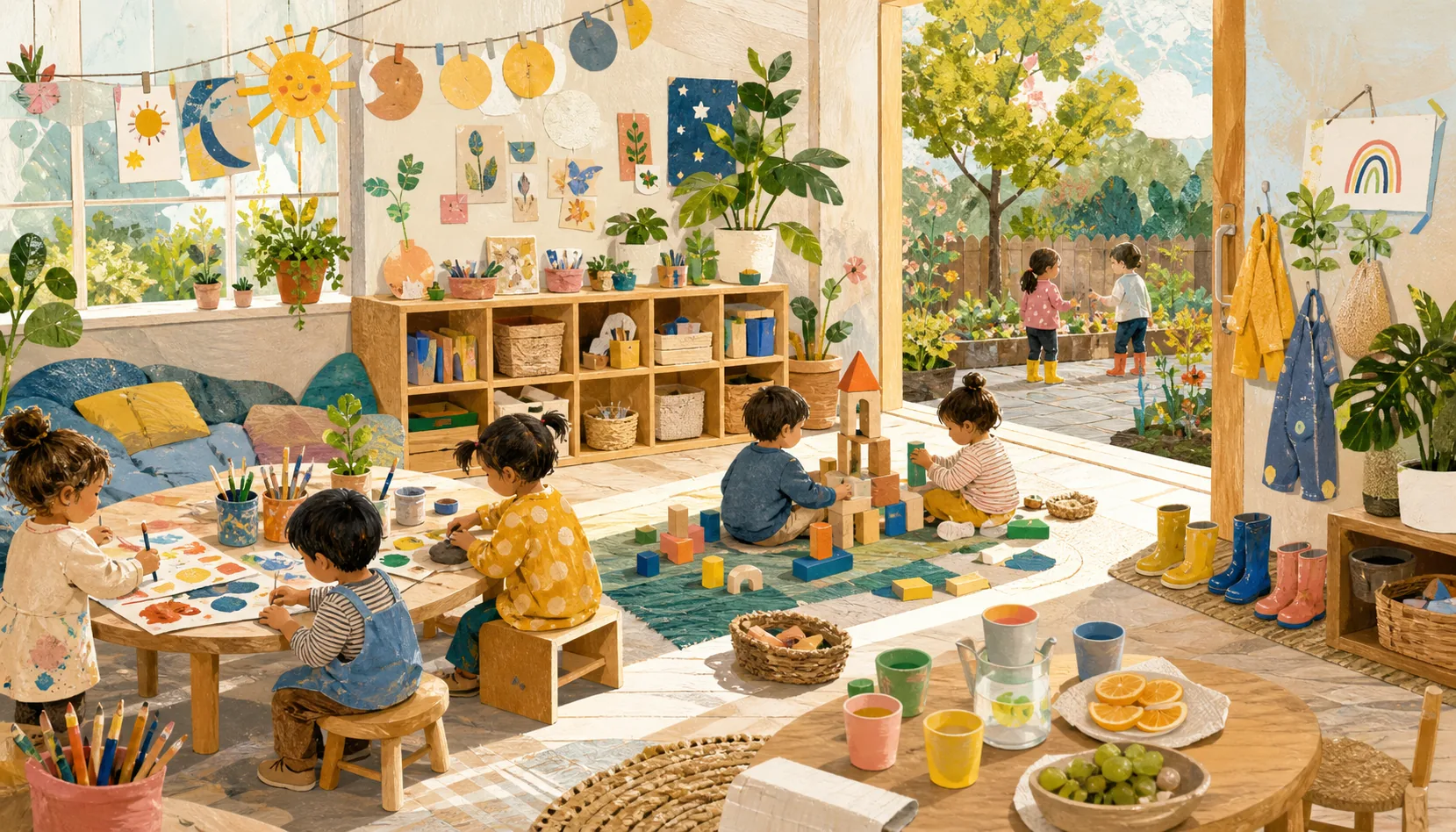
A small school for curious, loud, careful, muddy, hilarious children.
We teach letters and numbers, yes, but also how to wait, wonder,
repair, try again, and tell the truth about a hard morning.
6:1 everyday ratio2x outside time0 pressure to perform
Paint on elbowsBig feelings named kindlyScience in the puddleSnack negotiationsBlocks taller than plannedQuiet corners respectedTeachers who call earlyPaint on elbowsBig feelings named kindlyScience in the puddle
What makes us different
We do not sell a perfect childhood.
We build a sturdy one. Pocket Meadow is designed around real
preschool life: spills, friendships, questions, toilet accidents,
brave first tries, and the very serious work of making a tiny soup
out of leaves.
Parents get clear rhythms, published costs, honest teacher notes,
and a school that treats play as rigorous work instead of a break
from learning.
The day
The schedule bends without breaking.
Children need rhythm, not a factory bell. Each station carries a
teacher practice, a child-sized purpose, and parent-level clarity.
8:15 Soft Landing
Coats off, pressure off.
Drop-off is warm but not theatrical. A teacher meets each child,
names the transition, and offers a first job: water the basil,
choose a book, or guard the block tower.
Parents can linger briefly without being asked to sneak away.
Hard goodbyes get a follow-up message once the child settles.
Drop-off weather
Every morning arrives with a forecast.
Some children bound in. Some need the same goodbye five times. Both
are normal. Pick a forecast and see how the school responds.
Muddy morning
Send the boots.
We will probably find the puddle before the puddle finds us.
Clothes may come home freckled with evidence.
Useful, not vague
The parent questions, answered early.
18
Children per room
Three teachers stay with one mixed-age classroom, with no more than six children per adult.
8:15
Doors open
Core day runs 8:15 to 3:15. Early care starts at 7:45 for families who need it.
2.9-5
Ages served
Children do not need to read, write, or sit perfectly still. Toilet learning support is normal.
4
Teacher notes weekly
Brief, specific observations replace generic daily reports. We tell you what we actually saw.
Plain truths
The fine print is part of the promise.
We call when it matters.
Not every bump needs a siren, but patterns do. Sleep shifts, biting, friendship trouble, and repeated distress get clear adult attention.
Play is planned.
Teachers document emerging questions, then set up materials that make children test, count, compare, tell stories, and negotiate.
Repair beats shame.
When something goes wrong, children practice naming the harm, helping fix it, and returning to the group with dignity.
We do not rush childhood.
Kindergarten readiness means stamina, curiosity, language, number sense, flexible thinking, and confidence asking for help.
Programs
Small groups, big work.
Families choose a schedule. Children choose many of the questions
worth chasing inside it.
3 mornings
Seedlings
Gentle entry for younger preschoolers building trust, language, body confidence, and first friendships.
Days
Mon, Wed, Fri
Time
8:15 to 12:30
5 full days
Bridge Year
Project-based days for older preschoolers ready for deeper stories, longer builds, early writing, and shared jobs.
Days
Mon to Fri
Time
8:15 to 3:15
Afternoon add-on
Field Notes
Outdoor studio time for collecting, sketching, sorting, gardening, and turning wild observations into language.
Days
Tue, Thu
Time
12:30 to 3:15
Tuition
No surprise invoice after the tour.
These sample ranges keep the showcase honest. A real school can swap
in final numbers, fees, and aid details without changing the design.
Tours happen while the school is awake, not after everything has
been tidied into a brochure. You can bring your child, come alone,
ask about hard transitions, or just watch how the room breathes.
See arrival, snack, and outdoor flow.
Meet the teacher who would know your child.
Leave with costs, next steps, and no pressure pitch.